

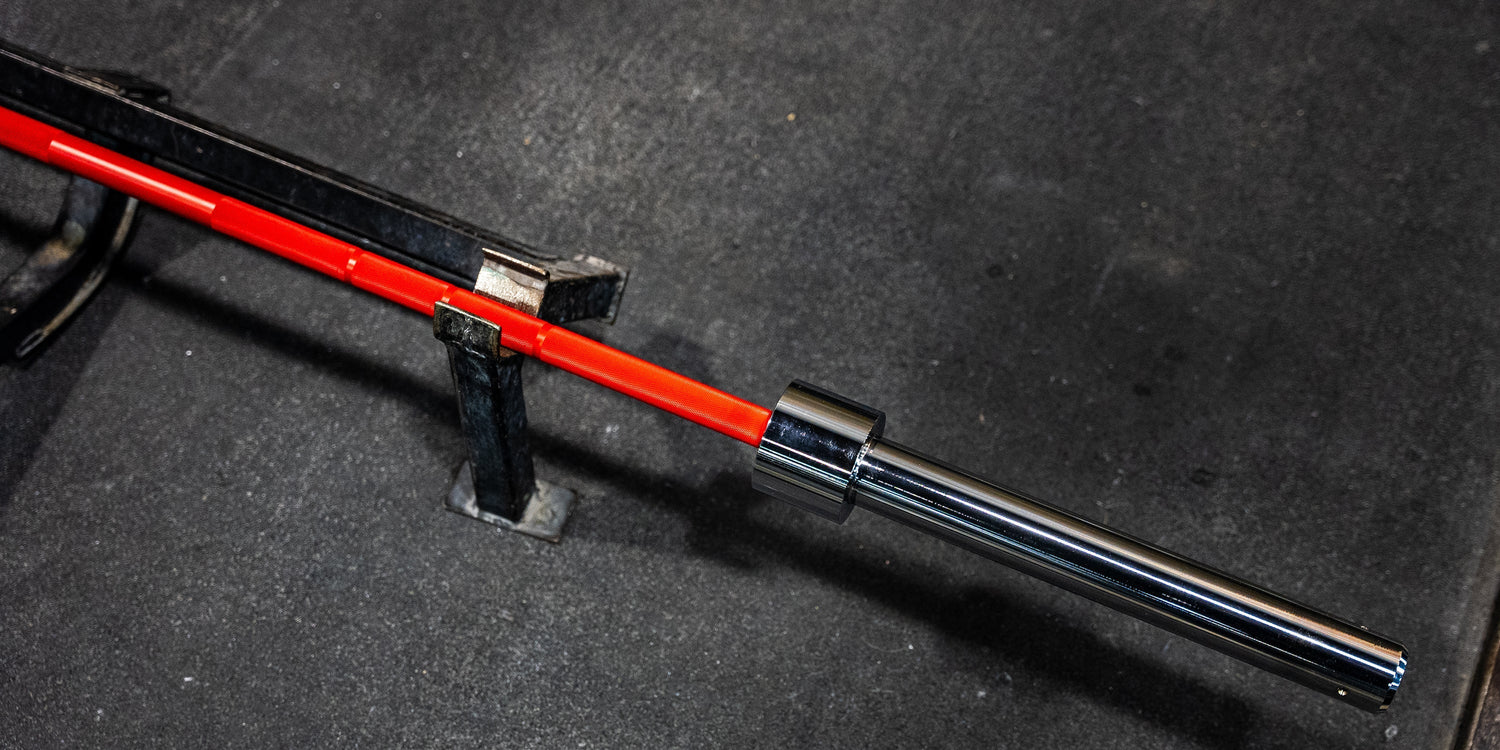
Bushing vs Bearing Barbells: What’s the Difference (and Which Should You Choose?)
If you’ve been researching barbells, you’ve probably come across the terms bushing and bearing.
At first glance, it seems simple:
- Bearings = more spin
- Bushings = less spin
But the reality is more nuanced — and more important.
Not all bushing barbells are created equal.
At Texas Power Bars, we’ve been building American-made barbells since 1980, and we’ve refined bushing systems that deliver smooth, controlled, maintenance-free performance for decades.
This guide breaks down the real differences — and how to choose the right bar for your training.
What Are Bushings and Bearings?
Both bushings and bearings sit inside the sleeve of a barbell and control how the sleeve rotates when you lift.
- Bushings → simple, durable sleeve rotation system
- Bearings → faster, more complex rotation system
The difference is not just how much the bar spins — but how it spins and when that matters.
Bushing Barbells (Controlled Spin & Maximum Durability)
Bushing barbells are the standard for strength training and powerlifting.
They provide controlled, consistent rotation without excessive spin.
This is exactly what you want for:
- Squat
- Bench Press
- Deadlift
Examples:
Compare All Texas Power Bars →
Why Powerlifters Prefer Bushings
- More control under heavy loads
- Less unwanted sleeve movement
- Better stability during slow, maximal lifts
- Extremely durable under repeated heavy stress
For heavy squats and bench presses, too much spin can actually reduce control.
Not All Bushings Are Equal
This is where most lifters get misled.
Cheap bushing bars often feel:
- Rough or inconsistent
- Too stiff or completely locked up
- Prone to wear over time
High-quality bushings — like those used in Texas Power Bars — are:
- Smooth and consistent
- Engineered for long-term durability
- Maintenance-free
The goal isn’t maximum spin — it’s the right amount of controlled spin.
Bearing Barbells (High Spin & Speed)
Bearing barbells are designed for Olympic weightlifting movements like:
- Snatch
- Clean & Jerk
They use needle bearings to create fast, free-spinning sleeves.
Why Weightlifters Prefer Bearings
- Faster rotation during explosive lifts
- Helps reduce torque on the wrists and elbows
- Supports timing in dynamic movements
In Olympic lifting, bar speed and timing are critical — and spin helps the bar move efficiently.
Why More Spin Isn’t Always Better
One of the biggest misconceptions is that more spin equals a better bar.
That’s not true.
For powerlifting movements:
- Too much spin can feel unstable
- It can make heavy lifts harder to control
- It introduces unnecessary movement under load
That’s why serious strength athletes prefer controlled rotation, not maximum rotation.
Which Bar Should You Choose?
Choose a Bushing Bar If You:
- Focus on squat, bench press, and deadlift
- Train with heavy, slow lifts
- Want durability and low maintenance
Recommended:
Choose a Bearing Bar If You:
- Train Olympic lifts (snatch, clean & jerk)
- Need fast sleeve rotation
- Prioritize speed and timing
Why Lifters Choose Texas Power Bars
With thousands of 5-star reviews and decades of proven performance, Texas Power Bars are trusted by lifters nationwide.
Our bushing systems are engineered to deliver:
- Smooth rotation
- Controlled spin
- Long-term durability
- Maintenance-free performance
Final Thoughts
The difference between bushings and bearings isn’t about which is better — it’s about which is right for your training.
Powerlifting demands control. Weightlifting demands speed.
Choosing the right bar means choosing equipment that works with you — not against you.

Leave a comment
All comments are moderated before being published.
This site is protected by hCaptcha and the hCaptcha Privacy Policy and Terms of Service apply.